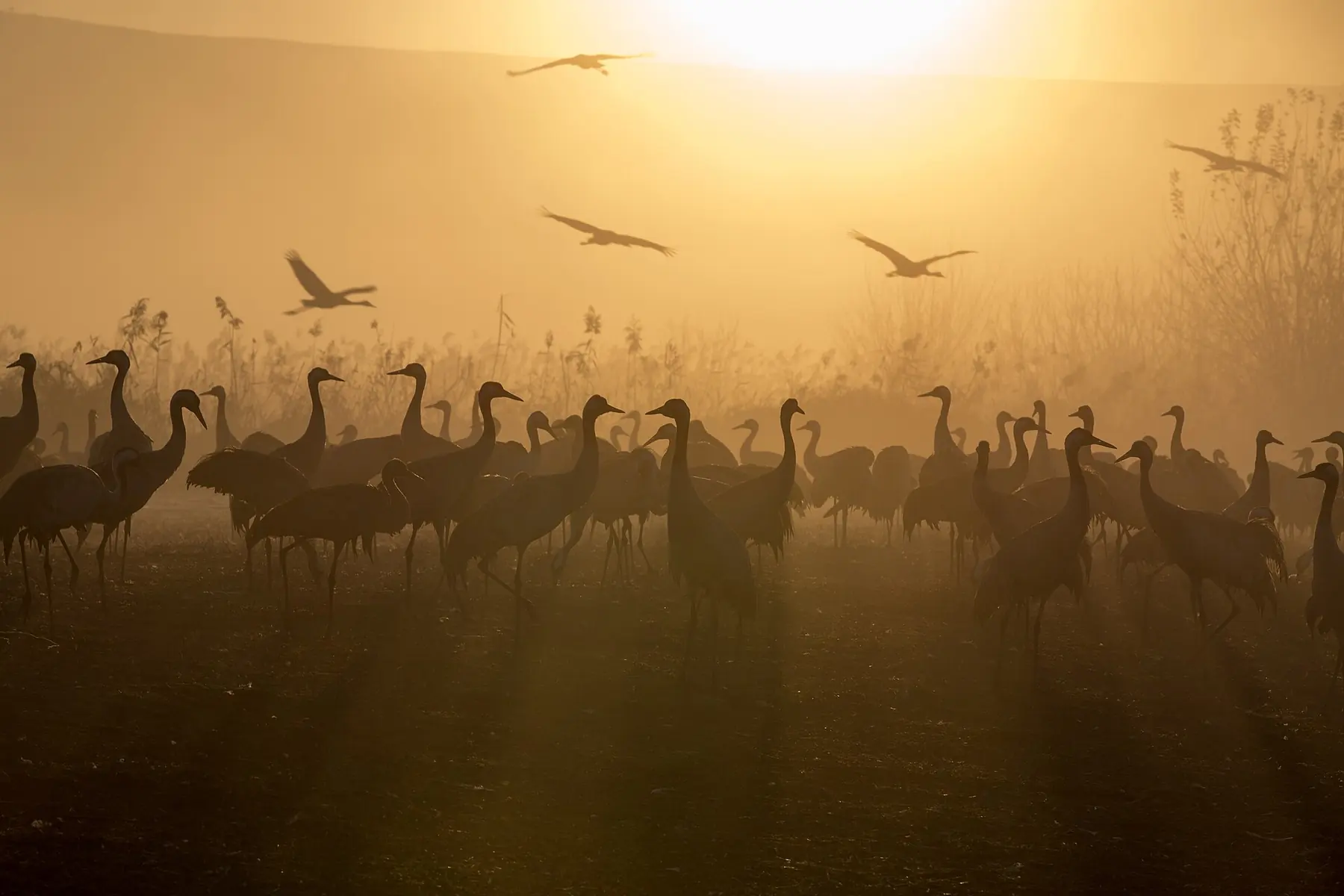
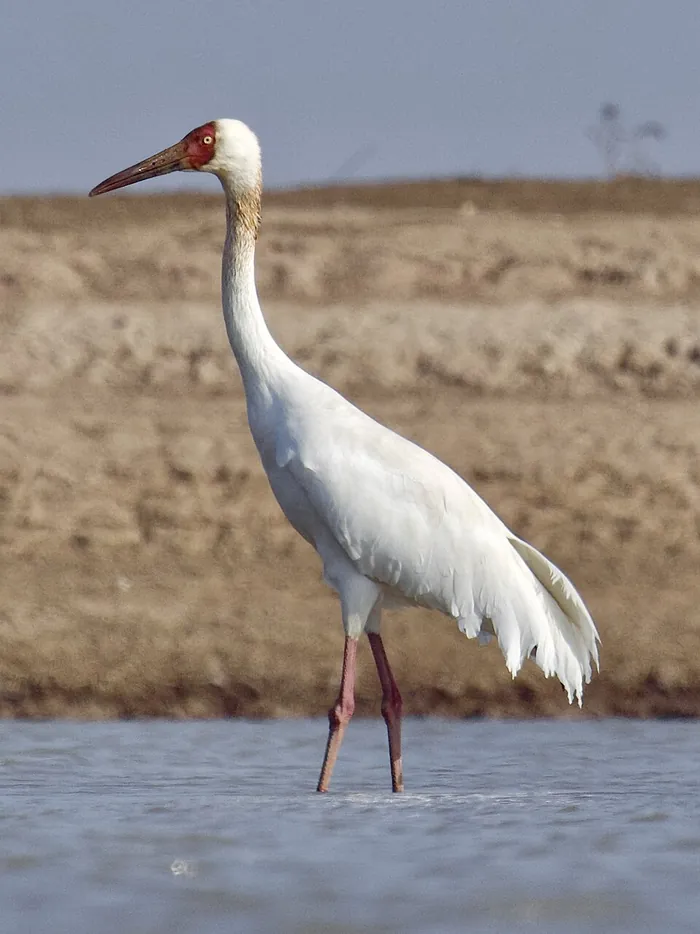
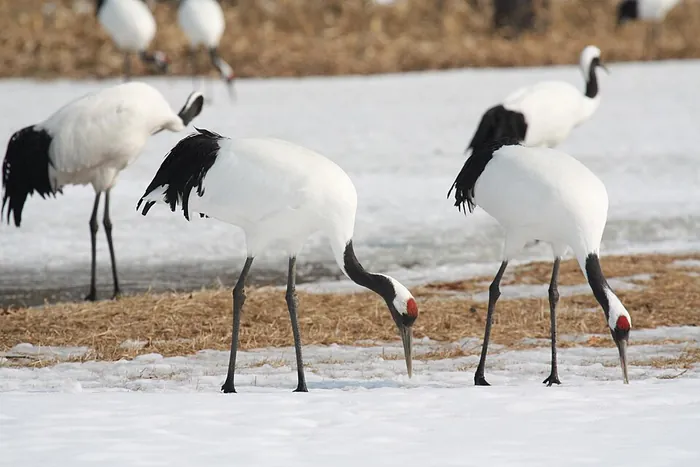
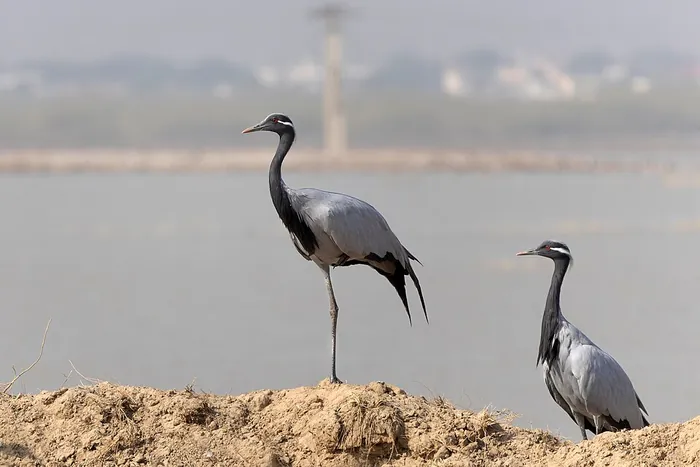
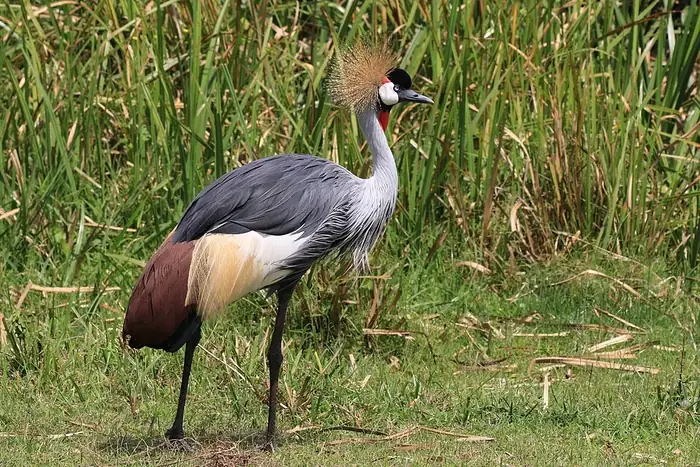
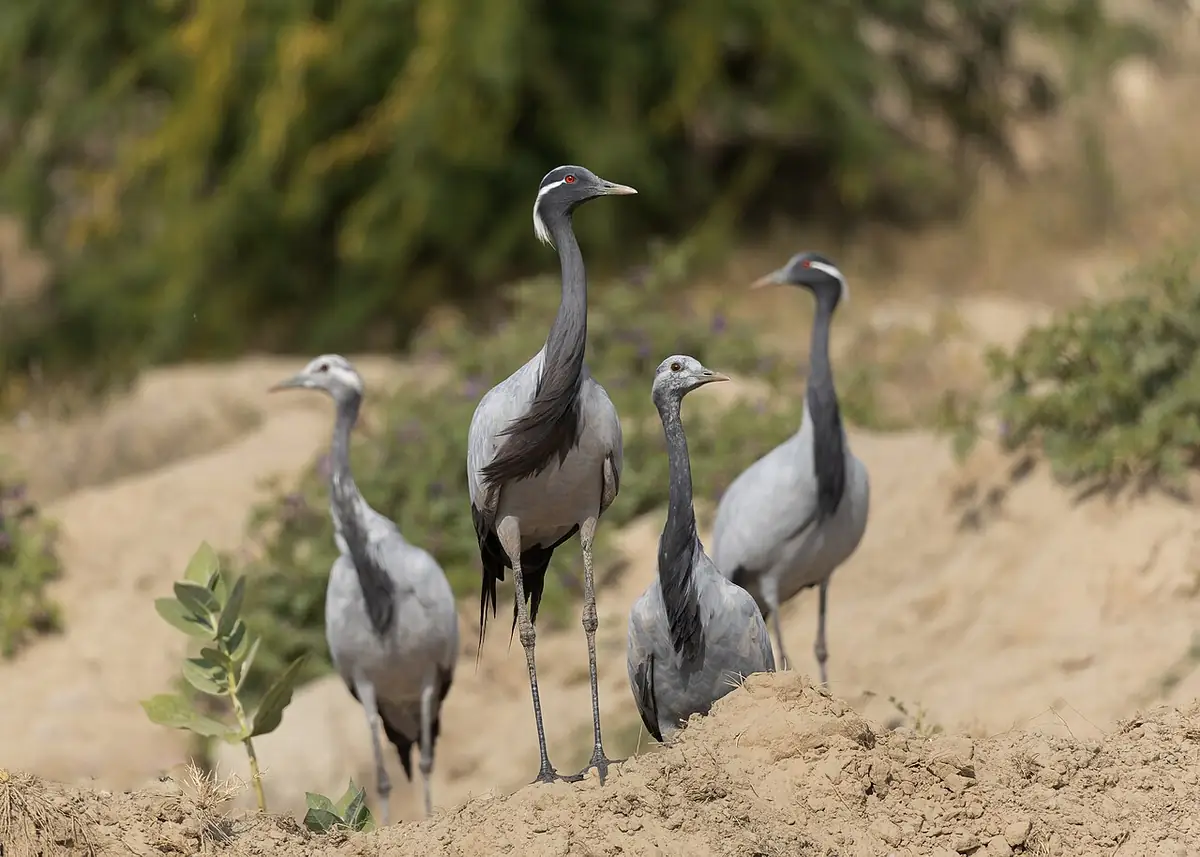
Журавлиные — семейство крупных длинноногих птиц, всего пятнадцать видов. Живут они почти везде, кроме Южной Америки и Антарктиды. Самый мелкий — красавка, около 89 сантиметров и два-три килограмма. Самые крупные — японский и индийский, под полтора-два метра ростом и до десяти килограммов весом.
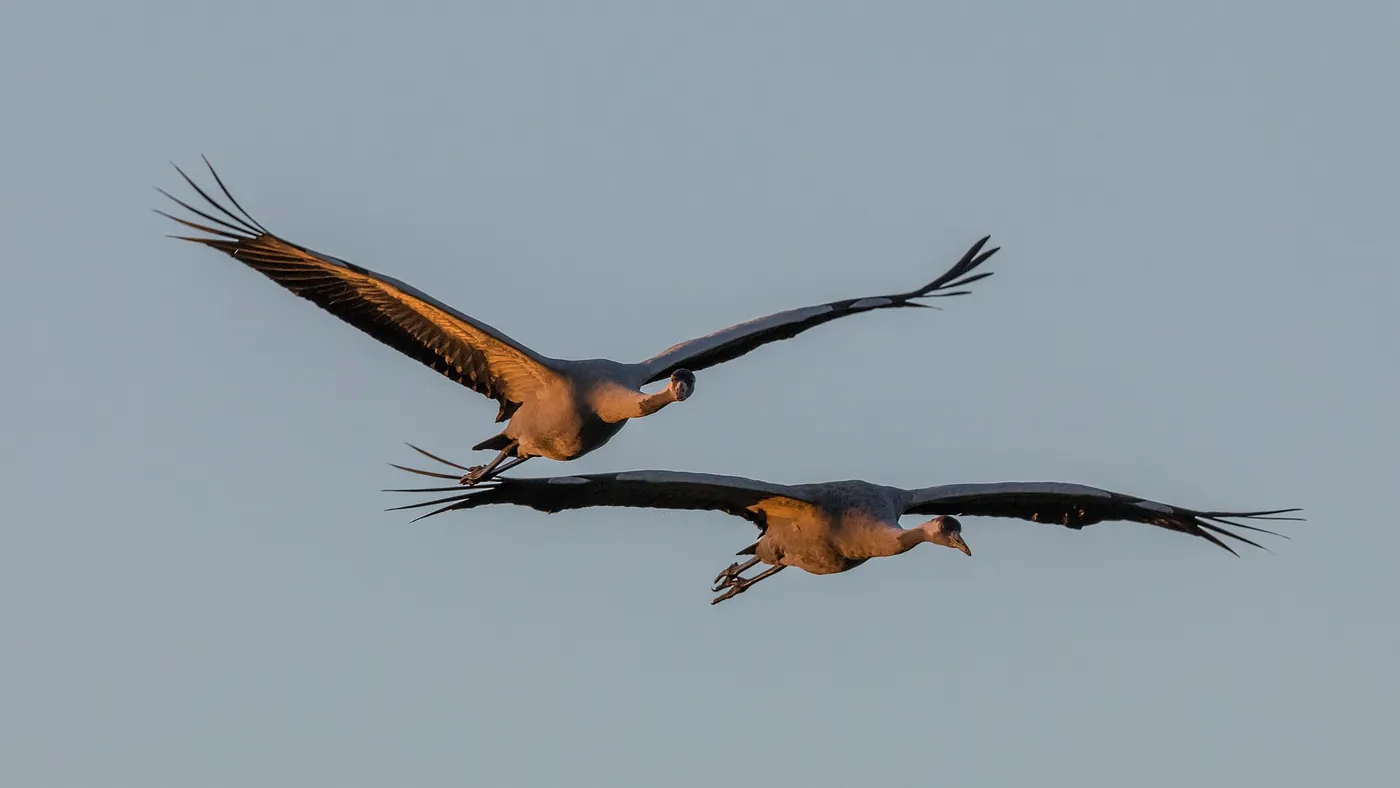
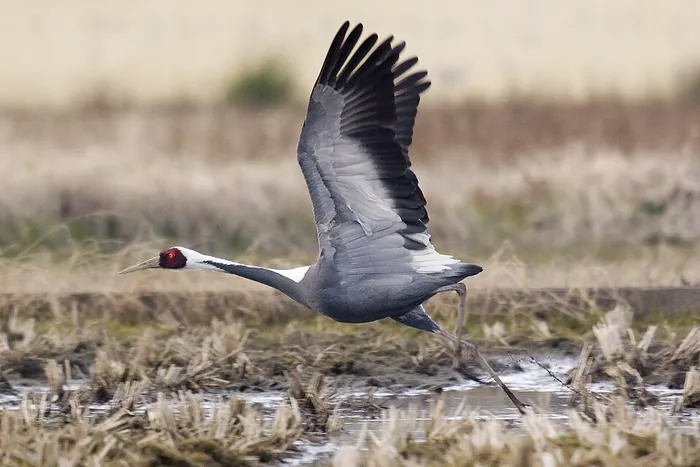
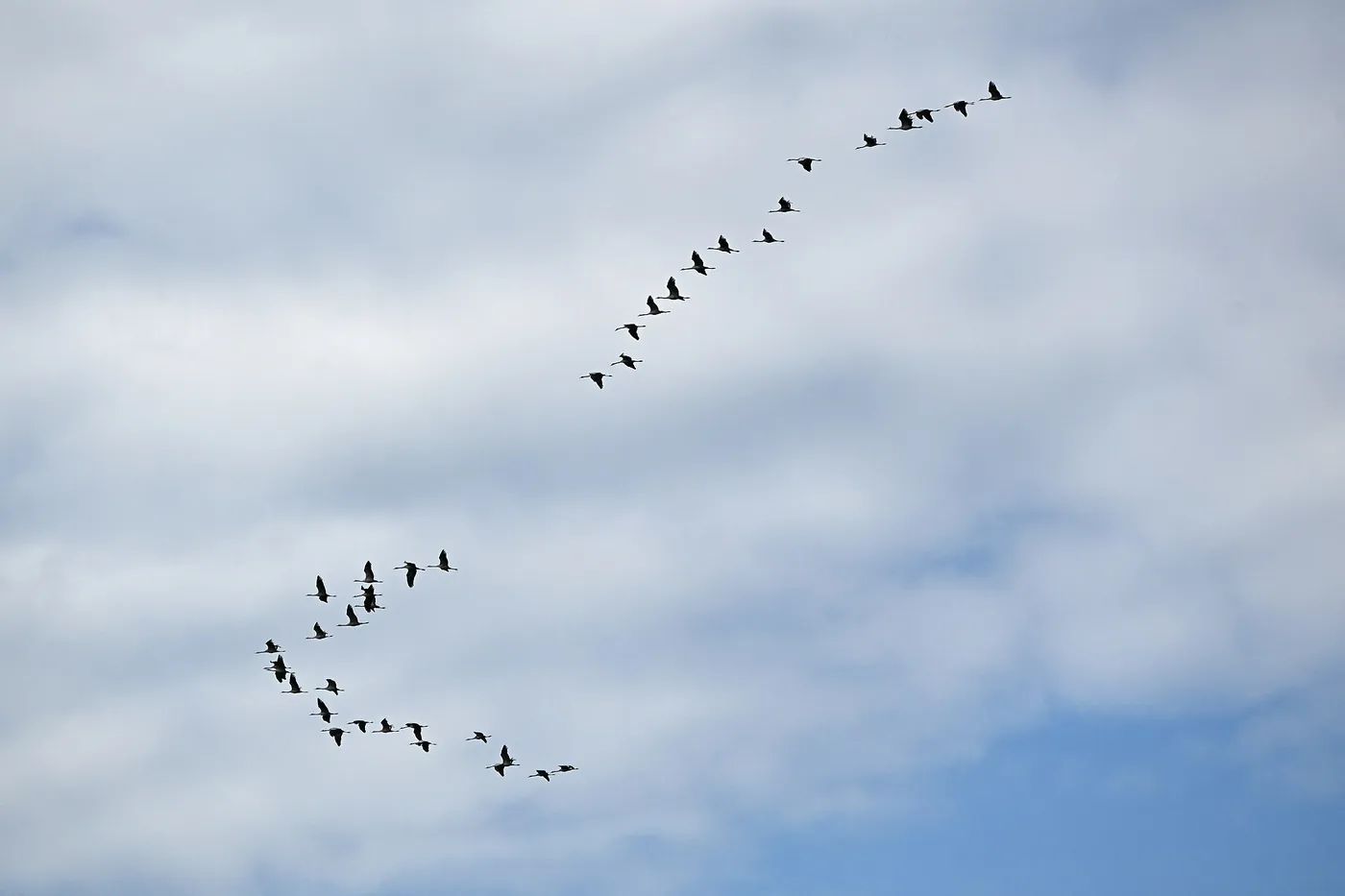
Журавля часто путают с цаплей или аистом, хотя в полёте их проще всего и различить: журавль летит с вытянутой шеей, ноги при этом уходят далеко назад за хвост. Цапля в воздухе шею складывает — притягивает голову к плечам буквой S. Аист, как и журавль, летит с прямой шеей, но он молчалив и гнездится на крышах и столбах, а журавль держится земли: болот, влажных лугов, степей.
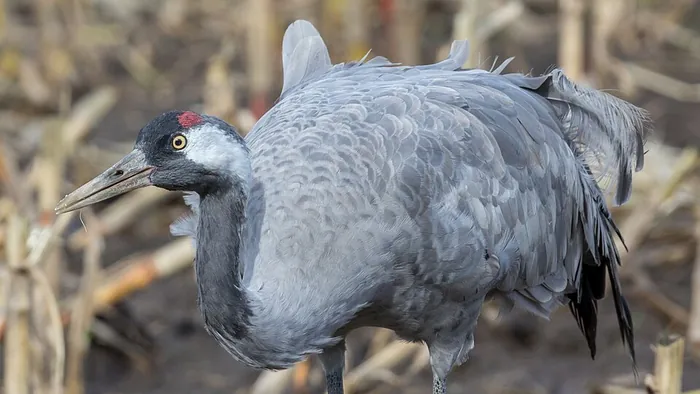
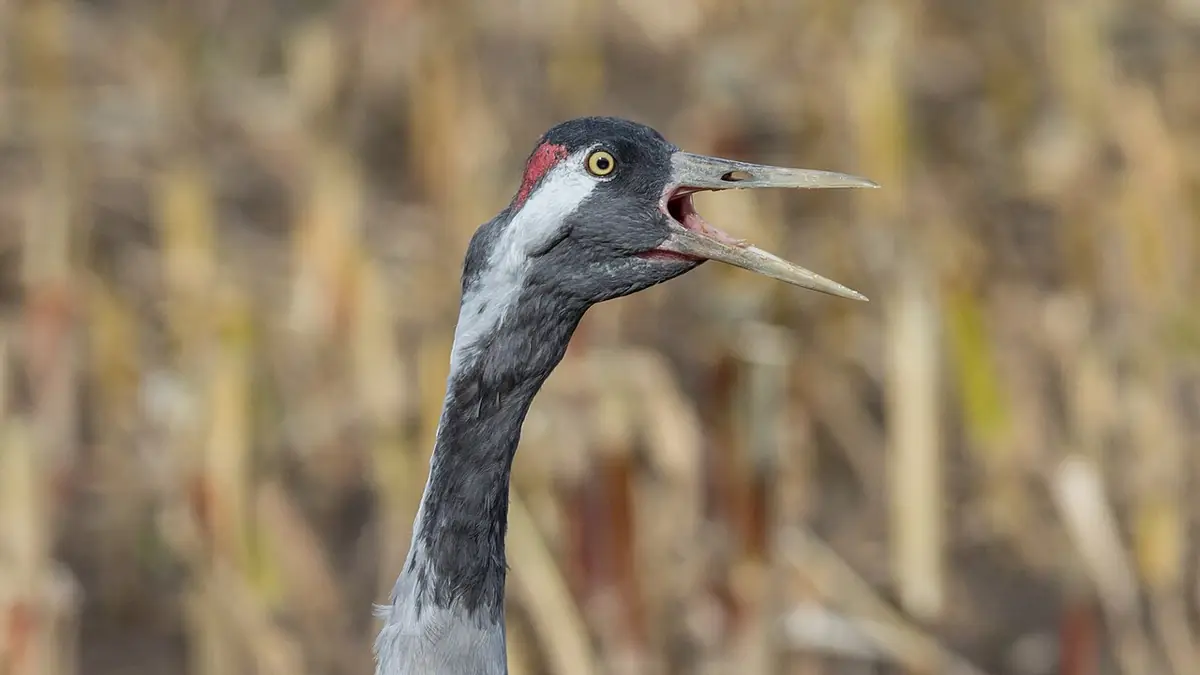
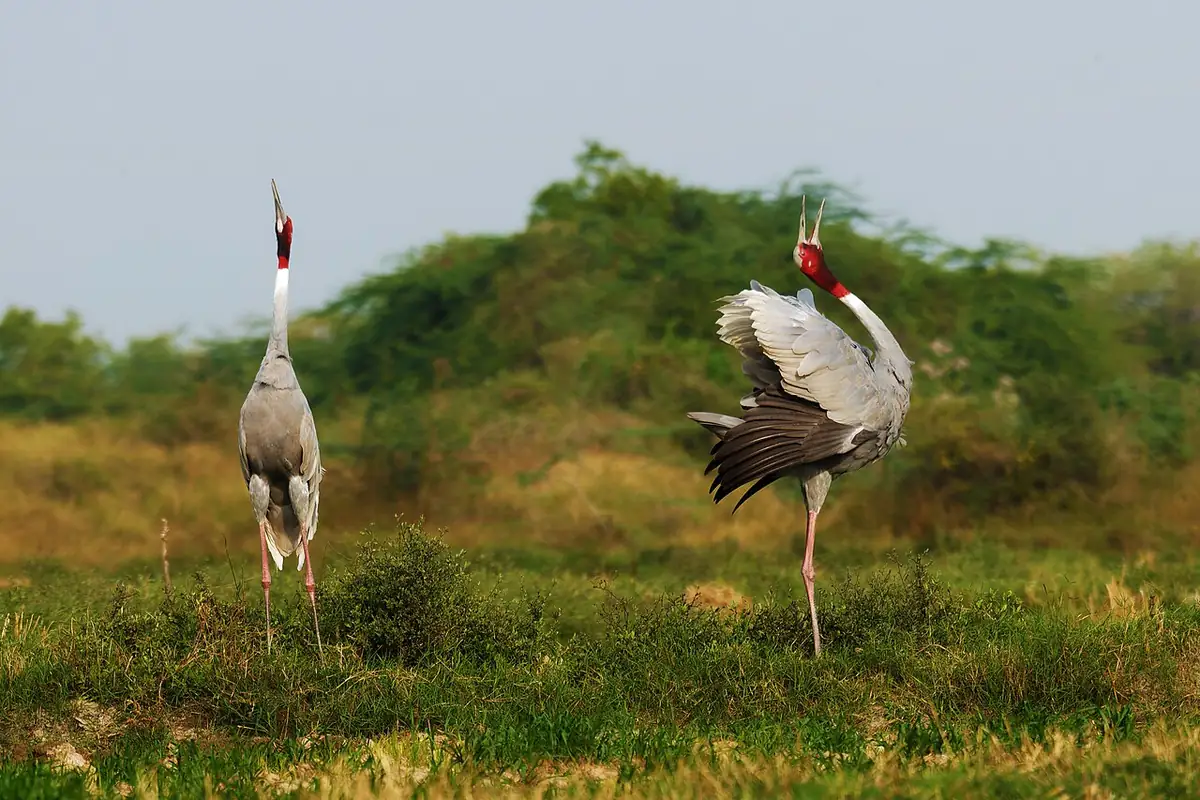
Ещё одно отличие видно вблизи. У большинства журавлей на голове есть участок голой красной кожи — «шапочка» или «маска». Это не украшение на сезон: птица управляет им, напрягая кожу и меняя размер яркого пятна, когда сердится или предупреждает соседа.
Cranes are a family of large, long-legged birds — fifteen species in all. They live nearly everywhere except South America and Antarctica. The smallest is the demoiselle, about 89 centimetres tall and two to three kilograms. The largest, the red-crowned and the sarus, stand up to one and a half or two metres and weigh as much as ten kilograms.
Cranes are often mistaken for herons or storks, though flight is where they are easiest to tell apart: a crane flies with its neck stretched out, legs trailing far behind the tail. A heron folds its neck in the air, pulling its head back against its shoulders in an S. A stork flies with a straight neck too, but it is a silent bird that nests on roofs and poles, while cranes keep to the ground — marshes, wet meadows, steppe.
Another difference shows up close. Most cranes have a patch of bare red skin on the head, a "cap" or "mask". It is not merely seasonal decoration: the bird controls it, tensing the skin to enlarge the bright patch when angry or warning a neighbour.